Why I built it
Every codebase has the same onboarding tax: you clone a repo and spend hours reverse-engineering its architecture, its setup, and which files actually matter. READMEs go stale, and the real mental model lives only in the heads of the people who wrote it. I wanted to collapse that gap — point a tool at a repository and get back the documentation you wish came with it.
What it does
You give Astroid one thing: a GitHub link. It explores the repository, reads the files that matter, and generates structured documentation — an overview, an architecture breakdown with an interactive component diagram, dependencies, getting-started steps, and a tour of the key files. The whole thing exports to a single ASTROID.md you can drop straight into the repo.
What's interesting
- One link in, structure out — no config, no manual tagging; the input is just a repo URL.
- Architecture as a diagram, not prose — components and their connections are rendered as a navigable graph, not buried in paragraphs.
- Reads to understand — generations report how many files were explored and how long it took, so the output is grounded in the actual source rather than guessed from the name.
- Built to ship into the repo — the result is a portable Markdown artifact, not a doc locked inside another tool.
Where it stands
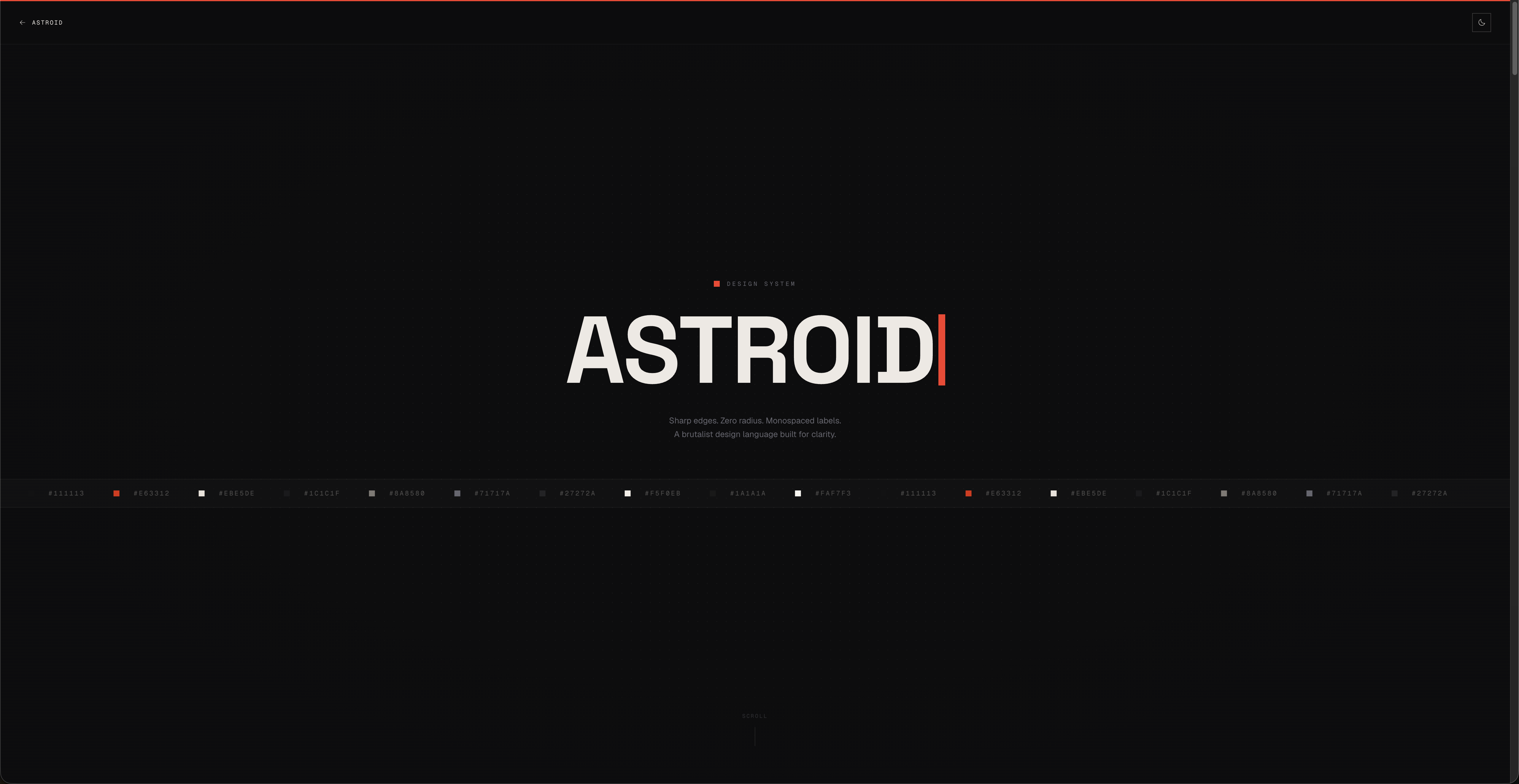
Live at getastroid.com, with the design system hosted at /design.